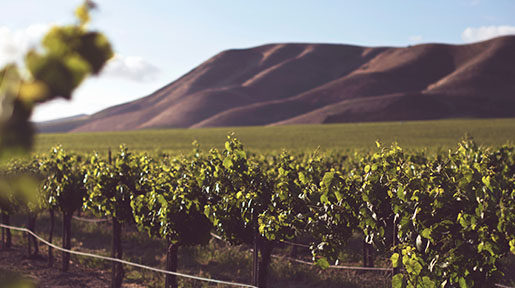
The Jumilla DO has turned potential disaster into triumph. In 1989 – long after most Spanish wine growers had encountered phylloxera, lost nearly everything, and replanted – the insect finally arrived in Jumilla, with predictable results. As phylloxera spread, grapevines succumbed, and Jumilla's growers had to make some hard choices.
The Rhone Report: About Rhone and Rhone-Style Wines and Winemakers is part of an ongoing series.
Last month we reported on American Rhone-style wines we tasted at the 16th annual Hospice du Rhone events in Paso Robles, California from May 1 to 3, 2008. We noted that this event was an opportunity to consider Rhone-style wines from a fresh perspective because, unlike most tasting opportunities, these events included Rhone-style wines from the Rhone Valley itself (51 wineries), elsewhere in France (4 wineries) as well as from Spain (4 wineries), Australia (17 wineries), South Africa (6 wineries), Chile (2 wineries), Argentina (1 winery) and the United States. While this was a California-dominated event, and while many of the Rhone Valley’s best producers weren’t represented, there was still sufficient European and other entries to make for interesting comparisons and contrasts.
Wines and mines have been part of Bierzo’s history since Roman times. After the remains of Saint James were discovered in the ninth century, pilgrims, too, became part of Bierzo’s heritage. In fact, some locals will tell you that the Mencía grapes grown in Bierzo were first brought to the region by pilgrims headed toward the famous cathedral of Santiago de Compostela, where Saint James is buried. Monks who came to Bierzo from France to serve the pilgrims expanded the area’s vineyards. The history of Bierzo is tied to its vineyards, mineral resources and monastic tradition.
Even if you’ve never heard of any other Spanish wine, chances are you’ve heard about cava. This is due to the huge international presence of cava sparkling wines. Freixenet and Cordoníu are the two best-known producers of cava and both wineries have done a marvelous job of marketing Spain’s sparkling wines outside of their home country. In fact, Spain exports more than half of the sparkling wines it produces, according to the Peñin Guide to Spanish Wine 2007.
Laely Heron's life reads like that of a character in a James Bond flick. Raised by adventure seeking parents, Laely spent her childhood moving from one exciting place to another -Algeria one year, Singapore the next- with over a dozen different places of residence by the time she graduated high school. College found Laely at the University of Colorado but wanderlust soon took her to Bordeaux to study oenology. The end result was a young woman with a nose for the unique customs, flavors, and scents that differentiate cultures. Not surprisingly, a wine career ensued. Adventurous, entrepreneurial, talented, ambitious and, let’s face it, stunningly beautiful, the only thing missing is a secret identity and a pistol in her boot and Laely Heron could very well be a Bond girl.
Action flicks aside, today Laely Heron is pushing the envelope in the wine industry as she endeavors to reshape the image of the “cult“ winemaker as one who makes high quality, ambitious, and affordable wines. Thanks to Laely for chatting with IntoWine.
The weather warms. You dust off your gas grill. It’s time to start thinking about wines for summer. Albariño wines from Rías Baixas are a perfect choice.
Wine writer Hugh Johnson calls Rías Baixas Galicia’s best DO. Recently, the DO launched a U.S. marketing campaign. Chances are you’ll see some Rías Baixas wines at your local wine shop, with notes about their refreshing taste and good value.
Madrid is not only the capital of Spain but also one of Europe’s great cultural centers. Tourists flock to Madrid to see its museums and plazas and to enjoy Spain’s famous tapas. Many visitors don’t realize that Madrid has a wine region all its own, the Vinos de Madrid Denomination of Origin (DO).
2005 Sexto Bodega Tres Suenos - IntoWineTV Episode 32Added: Thu, 04/24/2008 - 15:51 |
You can hardly find Priorat, or Priorato in Spanish, on a map, it’s so small. This tiny Catalonian wine region covers just 4,151 acres – Rioja, in comparison, is over 150,000 acres in size – but Priorat’s impact on the world of wine is large.
Last week, LVMH, owner of Moët Hennessy, Louis Vuitton and many other famous luxury labels, announced that it has purchased Bodega Numanthia Termes. The Toro winery will be in good company – Moët Hennessy also owns Dom Pérignon, Veuve Cliquot and many other well-known wine brands.
Numanthia Termes commands high prices for its top wines, and with good reason.