Everyone’s seen the labeling on wine bottles: “Contains Sulfites.” There is no shortage of opinions as to whether sulfur should be used at all in the vineyard or the winery. Much like anything, with opinions comes confusion. As a wine-industry professional, I would like to dispel some of the myths.
When it comes right down to it, there is always going to be some sulfur in wine. Sulfur is a natural byproduct of the fermentation process (yes, small amounts of sulfur can be found in bread too) and it is one of the most useful tools a winemaker has.
Most basically, sulfur, in fact sulfur dioxide (SO2 – sulfur bound with two molecules of oxygen), acts as a preservative to protect juice and wine from oxidation and the influence of bacteria. Without sulfur, grape juice would turn to vinegar, which is really acidic, and kind of burn a small hole in the ground for the seed inside to be planted. After all, wine is only a byproduct of the arrested breakdown of the grapevine’s seed delivery device.
Inside the grape, the seed has everything it needs to survive what would ordinarily be a cold winter on the ground. The sugars in the pulp of the grape act as food. In the pulp, there are small amounts of water to keep the seed hydrated. The skin of the fruit even acts as a barrier to the environment. However, as that grape breaks down, there are naturally occurring, palatially unflattering things happening. Without the addition of small amounts of sulfur dioxide – far below anything even remotely dangerous – grape juice would ferment and continue breaking down to the point of a sticky sour concentrate.
What sulfur-dioxide does is bind with oxygen and other components commonly found in wine which ordinarily would aid further decomposition of the juice. It also makes unwanted bacterial growth improbable. In other words, it keeps wine fresh. There are other ways to keep wine fresh, such as pasteurization (heating liquids to kill microbes, bacteria, etc), but they are not as effective as even a small addition of sulfur dioxide. There is no way around it (yet). Sulfur dioxide is the single-most useful additive in the wine making process.
But what are sulfites? When and why is sulfur used? Who was the wise guy that figured out that small additions of brimstone would help keep wine fresh? The truth is no one really knows how long sulfur has been used in wine making. There are brief discourses on sulfur in the letters of Homer and Pliny, but it is also widely accepted that sulfur (in addition to other methods) had been used to preserve food since ancient times. However, the first real document which mentions the specified use of sulfur in wine making is a royal German decree published in 1487.*
Although not widely used by any one region as an industrialized component of its wine practices until the 18th Century in France, not surprisingly in Bordeaux, sulfur had been popularized by Dutch merchants as a means of preserving wines as they traveled from one place to another. A match dipped in sulfur would be burned in empty barrels due to receive fresh wine.
What the sulfur did was turn the ordinarily oxygen-rich environment of an empty wine barrel nearly if not totally oxygen-deficient. On long sea journeys this was really useful, especially for wines with low alcohols and/or a higher Ph. (The more alcohol a wine has, the more protected it is from oxygen’s effects. Similarly, the lower the Ph is, the safer wine is from microbial decomposition.)
Needless to say, this is not all of how we do it today. In an ordinary cycle of turning grapes into wine, we will apply sulfur dioxide at very precise points with extreme caution and great foresight. First, many wineries are likely to add sulfur to the macerated grapes and/or must. Very basically, sulfur protects the must from bacteria and mold that might have been transmitted to the grape clusters either in the vineyard or en route to the winery. With red wine grapes, sulfur also helps the extraction process.
An estimated 500 mL of a sulfur-water (93% water, 7% sulfur) is about average for one ton of fresh grapes – that breaks down to be about 35 mL of pure sulfur per 150 gallons of must. It seems insignificant, but it is very effective in protecting the juice.
No other sulfur is added during fermentation. It would have an arresting effect on the yeast. Most dry wines will go through primary and secondary (malolactic) fermentation without receiving any more sulfur. When the wine has fermented as much as it will, sulfur is then added to protect the wine through aging.
The aging process typically involves at least one racking and blending of the wine before bottling. Some wines undergo more. Small additions of sulfur protect the wine during this practice. At bottling, a wine’s physiology is of the utmost importance for it will not undergo anymore work before a consumer will see it. The wine is now finished, fresh, nearly ready to drink.
As I stated before, the wine’s Ph and alcohol levels – and whether it has been through malolactic fermentation – will contribute to how much sulfur is added prior to bottling. The lower the Ph, and the higher the alcohol, the less sulfur a wine might need … there are exceptions to every rule, for every varietal, for every winemaker.
Once it is bottled, the wine will age and develop – more under a cork closure, less under a screw top or in a bag where there is very little if any oxygen contact. The sulfur both protects the wine from unwanted development and allows the wine to grow old gracefully.
In an ordinary situation, the sulfur will break down over time in bottle, so an older wine will typically have less perceivable, or free, sulfur. A wine sealed with a natural cork will have some contact with oxygen by way of the porous nature of the cork, so it might require more sulfur than the same wine sealed with a screw top.
Similarly, a wine sealed with a screw top might require less sulfur to protect it from extremes in the environment outside the bottle. However, because a screw top does not breath, it does not permit the level and/or rate of sulfur breakdown that a natural cork closure does and so sulfur might be more perceptible with these wines. Again, it depends on the wine and the winemaker.
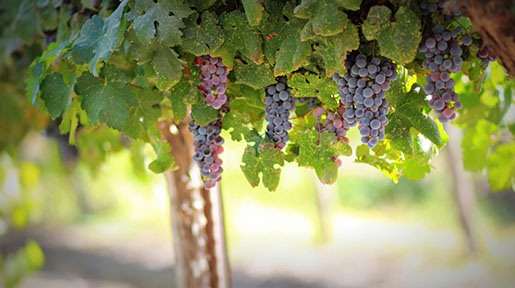
In the vineyard, sulfur is used to protect grapes from mildew and other unwanted natural antagonists to grape cluster development. It has a natural breakdown rate of several weeks and typically does not show up in the wine as a free/perceptible component of its physiology.
Most countries have laws that demand there be an acknowledgement with the rest of the labeling information of anything that has come in contact with any food being sold to the general public. This is why we see the “contains sulfites” stamp on every bottle. It’s not that it’s dangerous, it’s just that it’s in there.
Ultimately, the amount of sulfur in dry table wine will not aggravate anyone but those who are asthmatic – sulfur harasses the mucous membranes of the respiratory system. However, there are also those who have extremely sensitive palates and might experience some heart burn if the wine contains unbound sulfur.
Warnings such as the United States Government requires on wine labels (re: complications with pregnancy and the operation of heavy machinery while/after drinking wine) are there simply there to inform the consumer.
As a wine-industry professional, I have to say that if someone came up with another additive that has the same positive effects as sulfur-dioxide does for wine, then they will likely be very, very rich. Until then, we are stuck with something that sounds dangerous but is not.