NORTHERN CALIFORNIA WINERIES GO ORGANIC, SUSTAINABLE AND BIODYNAMIC
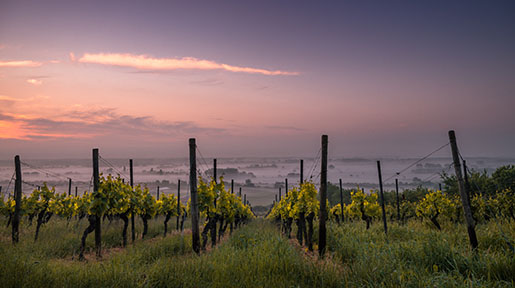
From large to small, northern California wineries are starting to color their operations green, whether by organically growing their grapes, practicing sustainable activities or creating biodynamic environments.
The three categories of viticultural conscience can be summarized as follows:
- Organic is what you DON’T do: don’t use synthetic pesticides, herbicides or fungicides in the growing process, and don’t add sulfites during winemaking. Sulfites are compounds that contain the sulfite ion SO32−, added to prevent oxidation.
- Sustainable is what you DO do: set up your growing area so it is self-sustaining. Plant cover crops that will be ploughed under to add nutrients back into the soil, and attract beneficial creatures to eat destructive wildlife.
- Biodynamic is also what you DO do: create a self-contained ecosystem that not only allows your vines to thrive, but benefits all the other inhabits of the network.
Full organic certification of wineries is difficult to obtain and rarely sought, due to the sulfites rule. Although sulfites develop naturally during the winemaking process, most wineries add the industry standard of 30 parts per million to prevent spoilage. Winemakers compromise by getting certified at the vineyard level, so they can state that their wines were made with organically-grown grapes. The umbrella organization that certifies most growers is the United States Department of Agriculture (USDA) National Organic Program (NOP) which develops, implements and administers national production, handling and labeling standards for organic agricultural products. Fifty-five domestic and thirteen California USDA accredited sub-organizations award certifications by following guidelines set forth by the NOP. Click here for more information.
Sustainability, unlike organic and biodynamic distinctions, cannot be certified, but wineries that practice sustainable activities are proud to state that they contribute positively to the environment without depleting it, while continuing to produce concentrated grapes for wines high in flavor. Although there is no official certification, the Wine Institute set up the Code of Sustainable Winegrowing Practices, the benchmark for self-perpetuating environments. See www.wineinstitute.org for the details. Guidelines specific to California and in concert with the Wine Institute have been set forth by the California Sustainable Winegrowing Alliance.
Vineyards, among other farm types, can be certified biodynamic by Demeter USA. Biodynamic grape growers practice sustainable methods, but do more than that. The term biodynamic comes from the work of Rudolph Steiner, who believed that when the farm is viewed as one organism, then maintenance and furtherance of soil life becomes a basic necessity to be preserved for generations. For each ecosystem, understanding of the geology, soil, climate, plants, animals, and human ecology are necessary to the success and longevity of that environment. An incredible intellect, well-versed in numerous subjects, Steiner’s biodynamic methods are born of a spiritual perspective, as he set out to help the plight of farmers who observed the deterioration of soil quality when the land was farmed from year to year. Steiner espoused biodynamic principles through a series of lectures in Germany in 1924, and the concept spread to other parts of the world. Today, biodynamic farming is practiced in 50 countries.
Following are wineries that incorporate organic, sustainable and biodynamic practices into their viticulture and winemaking.
1. The Winery: PAHLMEYER
SUSTAINABLE, WITH ORGANIC TENDENCIES
Owner Jason Pahlmeyer works with growers to create environments for balanced growth, resulting in intense flavors in his high-end wines. But for his own vineyards, he defers to his viticulturist Amy Warnock. With a Masters in Viticulture from UC Davis, Amy has been with Pahlmeyer since 2002. Her enthusiasm for her work and the vineyards is clear, as she describes her philosophy and the techniques she has employed for the health of the natural world and ultimate successful expression of the terroir in the resulting wine.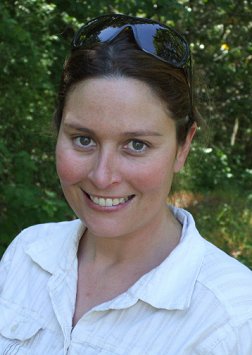
“In general, I find that the most aggressive treatments – fungicides, insecticides, fertilizers, and even irrigation – are a reaction to existing problems. My primary goal in sustainability is to achieve a balance that emphasizes preventing the problems from initiating and therefore avoiding as much of the treatment as possible.” Such forward thinking is admirable – prevention – often touted, rarely realized.
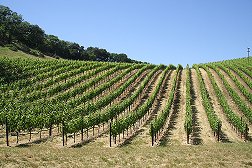
Amy takes me through Pahlmeyer’s Waters Ranch Vineyard to demonstrate the sustainable activities she has implemented. The immense property near the Milliken Creek Reservoir, high in the hills above Napa, is 79 acres, with striking views and notable features.
COVER CROPS
Cover crops are the backbone of the nutritional strategy applied to the vineyard. Typically, the plants are eventually ploughed to add nutrients back into the soil, but Amy mows her crops to provide mulch for the soil without killing the vegetation or causing dust and erosion. “Selecting cover crops that specifically address an area’s nutritional needs has helped to eliminate the need for synthetic fertilizers. In the vigorous areas with high soil moisture content, competitive grasses and grains are planted to fight with the vines for the available soil moisture. In weaker areas, legumes are planted and mowed prior to flowering, while the nitrogen source is in the most available form to the vines. If a nutritional amendment is needed, we source organic compost as a nitrogen and carbon source, applying it only to the weaker areas.”
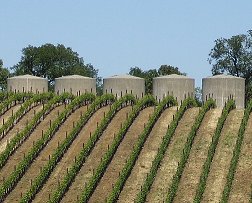
Pahlmeyer Winery takes measures to decrease the need for water and lower energy use. Amy comments, “Minimal irrigation is applied to the vineyard. Many tools are utilized to gauge the plants’ water stress, and small irrigations are conducted accordingly. If there is a weaker area with in a vineyard block, it will have a separate irrigation drip line. This allows only the weak areas to receive water if the entire block is not in need.
“The well, pump and storage tanks are located at the higher section of the Napa vineyard. This allows the lower section to receive irrigation water via gravity flow, reducing energy used to pump the water.”
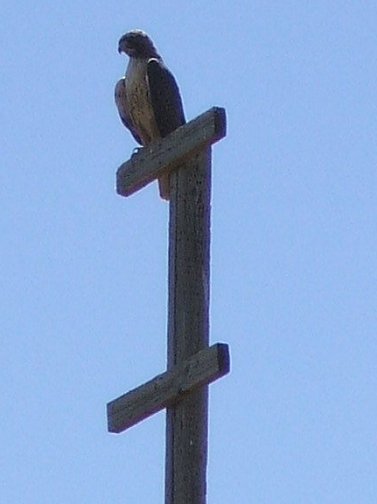
The natural environment around the Waters Ranch is essentially its own ecosystem.
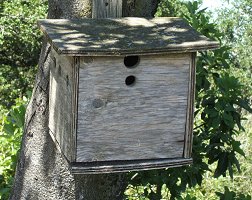
Amy helps it along by adding bird boxes, owl boxes and perches to attract predatory birds that help to control gophers and other troublesome populations.
“While the perimeters of the two Phases of Napa vineyards are protected by deer fences, a wildlife corridor exists between the two phases to allow contiguous access for wildlife.”
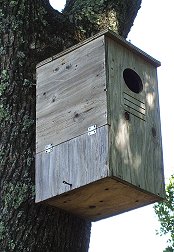
In keeping with her general philosophy of prevention, Amy takes measures to avoid fungal infections, such as pruning while sap flow is active to avert infections in the vulnerable pruning wounds. “Strategically removing leaves and shoots increases the air flow and light exposure in the canopy which greatly reduces the pressure of mildew and/or botrytis infections. Weather is carefully evaluated to stretch the interval between treatments as long as possible.” These actions alleviate the need for fungicides.
After several trips to France to isolate some of the best clones of classic Bordeaux varietals, attorney Jayson Pahlmeyer planted his first Napa Valley vineyard in 1980, then released his first vintage in 1986. Over time, Pahlmeyer has won numerous accolades for its high caliber wines, and now produces 10,000 cases per year. From Robert Parker, “. . . the charismatic Jayson Pahlmeyer and his exuberant winemaker, Erin Green, who apprenticed for Helen Turley for many years, are turning out some fabulous wines. I terribly underestimated their 2005 reds. However, there’s always time to correct these things, and I intend to do it . . .”, Wine Advocate, December, 2007.
Pahlmeyer’s Wayfarer Farms Vineyard has been certified by Fish-Friendly Farming, a unique green certification program for grape growers, and this year, Waters Ranch Vineyard will undergo the same FFF certification process. Fish-Friendly Farming provides third-party certification that documents environmentally friendly land practices.
2. The Winery: SPANN VINEYARDS
SUSTAINABLE, SHOWING SIGNS OF BIODYNAMISM
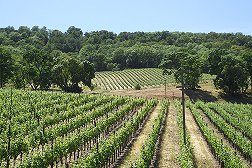
The Spanns’ property, Betsy’s Bachacher Vineyard, located among the Mayacamas Mountains in Glen Ellen, is a glorious, natural unit of wildlife. Peter and Betsy Spann cultivate their 40 acres of vines, ponds and animal life for the benefit of the whole, as well as the positive outcome of their food-friendly wines. But mostly, they leave it alone, a core principle of sustainable farming. Betsy notes, “. . . the sustainable activities I practice in the vineyard are pretty passive . . . I am willing to sacrifice the groomed (I like to say vacuumed) look of many vineyards to achieve a real balance in the land, which actually makes less work for me, not more . . .”.
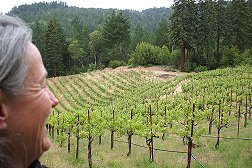
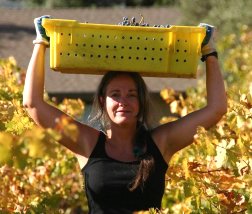
Betsy expertly maneuvers her jeep as she takes me on a wild ride through Betsy’s Bachacher Vineyard for a tour of the landscape as she explains what she does, as well as what she does not have to do to promote this flourishing, natural entity.
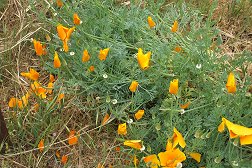
Planting cover crops that reseed themselves is truly a low-maintenance, shrewd solution to providing nutrients and adding nitrogen back into the soil. Betsy uses crimson and rose clovers, birdsfoot trefoil, native grasses, California and red poppies, alyssum and lupine. Betsy adds that other benefits of cover crops are to “. . . eliminate soil erosion, provide habitat for beneficial creatures and let the vineyard be its own little ecosystem, not a mono-crop, mono-culture.”
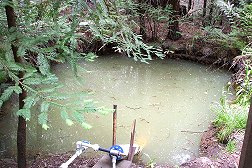
Two natural ponds with streams live on the Spanns’s property, contributing ongoing water sources to the site and easy access for deer and raccoons. The fact that several frogs and newts make the ponds their home is an indicator to Betsy that little or no pollution has entered the area. The water from the springs and ponds goes underground and eventually irrigates the vineyards. The natural pressure of the aquifir pushes to the top of the mountain and comes out in the form of natural springs. “Irrigation is only used when establishing new plants, so I consider the vineyard dry-farmed.”
HABITATS
The Spanns don’t have to exert themselves to create habitats for beneficial creatures, as the vineyard is located in a redwood/Douglas fir forest. “We do have some gophers, voles, mice, gopher snakes and rattle snakes, but they provide a way for the owls, hawks, vultures, skunks and raccoons to survive . . .
“There is an established habitat surrounding our three acres, 360 degrees. We put up a couple of owl boxes and a Kestrel box, but there were no takers, as there are plenty of trees that have always housed them. We have a cave of bats in the creek; red tail hawks and a pair of golden eagles grace our mountainside. I have identified spotted owls, great grays and pygmy owls in our vicinity, also pileated woodpeckers.”
Betsy comments that rabbits are naturally attracted to the area. “The first year when I planted the cover crops for erosion control, I put in several rows of habitat crops that were not to be mowed. The crops included parsley and carrots along with the clovers. After a season of seeing what was already here, it seemed silly to try to outdo nature.”
UNIQUE PRACTICES 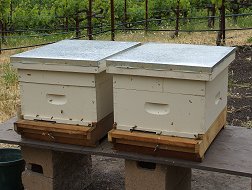
ABOUT THE WINERY
When Peter and Betsy Spann realized they were not going to sell any grapes after their first harvest, they went out and purchased a generator, garage pump and tent, then dived into making their first vintage in 2001, when the industry experienced a surplus of grapes.
Luckily for us, they did. For such a small winery, their awards are impressive. Three vintages of their Chardonnay-Viognier were named Best of Class in the White Varietal Blends category at the 2005 California State Fair. The 2002 MoJo Russian River red blend garnered a Double Gold at the Sonoma County Harvest Fair. Finally, their 2003 Mayacamas Range Cabernet Sauvignon earned 90 points from the International Wine Review.
Spann Vineyards’ wines are also a great value. Meet Betsy’s Bachacher Bottle Blond, described on their website as follows:
“You: Seeking pleasure . . . wanting to try something new and provocative.
Me: Waiting for that special someone to share my qualities with......Perfectly proportioned, easy on the palate . . . ready for a walk on the beach or a candlelight dinner . . . with this blond, you'll have more fun.” You can’t beat an evening like that for $15.00!
Although case production for Betsy’s Bachacher is just 200 cases per year, the Spanns produce a total of 6000 cases by sourcing grapes from other vineyards. They create wines that are pure, authentic to the land, distinctive and enjoyable. “Our winery is small and we make red wine here the old-fashioned way because we can, and prefer to do it that way . . .”
3. The Winery: BENZIGER FAMILY WINERY
ORGANIC, BIODYNAMIC AND SUSTAINABLE
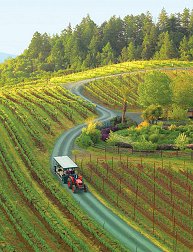
Since the 1980s, Benziger Family Winery has practiced environmentally beneficial farming activities, with its leaders inspired to learn even more when certain viticulture techniques seemed to yield more flavorful, aromatic grapes expressive of the site. The principals realized that attention to their 30 acres of gardens, woodland, riparian areas, wetlands, cover crops and wildlife sanctuaries was as important to the health and flavor of the grapes as efforts directed toward their 42 acres of vineyards (both within their 85-acre Sonoma Home Mountain Ranch property).
“The Benzigers have been on top of the green movement for the last ten years,” says Mike Sangiacomo of Sangiacomo Vineyards.
“When we first started winegrowing, we were focused on keeping nature out of the vineyards,” says Winery Partner Chris Benziger. “Biodynamics is about eliminating those barriers and letting nature in.”
Organic Certification
Benziger buys certified organic grapes from several growers to produce the following organically-grown wines: Muscat Canelli (Bartolucci Vineyard), Zinfandel (Bruschera Vineyard) and Merlot (Feingold Vineyard). Regular audits are performed by the California Certified Organic Farmers, a sub-group of the USDA. Currently, 20 percent of Benziger’s total wine production is made with organic grapes. All other Benziger wines, as of the 2007 vintage, are certified sustainable, to be discussed later.
To achieve the certified status, growers employ natural methods, such as crop rotation, tillage and composting to control weeds and other pests, instead of using synthetic chemicals.
On the Benziger estate, elimination of chemicals and pesticides is achieved through a balanced system of predator and prey relationships, encouraged by the creation of three wildlife sanctuaries to attract beneficial insects and small animals that prey on pests.
As early as 1987, Benziger incorporated Integrated Pest Management (IPM) into their estate, a pest control strategy that includes mechanical, genetic, biological, legal, cultural and chemical management. IPM was formulated as national policy by President Nixon in all relevant sectors in 1972, and in 1979, President Carter established an interagency IPM Coordinating Committee to ensure development and implementation of IPM practices.
Biodynamic Certification
In 1996, Benziger began converting their property to a biodynamic farm, and in 2000, became the first in Napa or Sonoma County to achieve Demeter certification. Benziger now owns four biodynamic vineyard estates on 168 acres in Sonoma County, with all wines produced from these estates being certified biodynamic.
In keeping with biodynamic principals, Benziger pays close attention to the forces of nature that influence the vine, and maintain a closed nutrient and self-sustaining ecosystem.
“The practice of biodynamics yields connections,” Mike Benziger notes. “It connects you to the land through the root systems of the plants. It connects you to the universe through the sunshine that drives photosynthesis, and it connects people through the enjoyment of wine.”
Sustainable Certification
Although there is no official certification for sustainable farming, individuals and groups have devised their own programs and certifications. Once Benziger achieved biodynamic certification, the family wanted to go even further to achieve self-sustainability, and spread this philosophy and practice to all of their almost 50 growers.
In 2005, Benziger approached Stellar Certification Services (an official organic certifier and branch of the Demeter Association) to help create a comprehensive, certified sustainable program, and required their growers to learn and implement the program’s precepts. Growers were asked to assess their vineyards referencing the Code of Sustainable Winegrowing Practices, then demonstrate adherence in eight areas: canopy management, soil fertility, disease and pest management, irrigation management, natural resource management, employees and neighbors, continuing education and wine quality.
At this time, the certified sustainable program is for Benziger growers only, but because Benziger is devoted to education, the program could be expanded in the future. “We began officially working on the certified-sustainable farming program in 2005, and already we’re seeing results in terms of heightened fruit quality,” says Vice President of Winegrowing at Benziger, Mark Burningham, who worked with each grower to develop an individual action plan. Once certified sustainable, a grower isn’t far away from attaining biodynamic and organic status.
COVER CROPS
Revitalization of soil is achieved by planting the following cover crops: mustard, annual rye grass, zorro fescue, blando brome, rose and crimson clover, Austrian winter peas and bell beans, oats and wildlife sanctuary plants. Aspects of each of these combats erosion, controls weeds and manages vine strength.
IRRIGATION
Benziger practices deficit irrigation for reduced berry size, increasing the skin-to-juice ratio, which ultimately intensifies the wine. Growers are encouraged to maintain baseline standards for managing irrigation to maximize ripening, ultimately conveying the distinctiveness of the terroir and varietal.
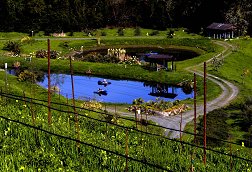
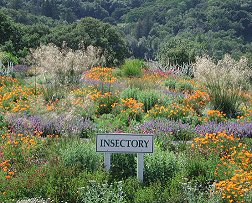
To encourage wildlife, property sanctuaries provide habitats for over 50 plant types, songbird populations, Watusi cows and organic sheep. Benziger added numerous owl boxes for rodent control and bat houses for insect control. The insectory attracts various beneficial insects to the vineyards. For instance the verbascum attracts butterflies, great for pollinating cover crops.
Wesley, the Watusi bull, and two cows, Lucy and Baby Poppy, not only add to the biodiversity, but contribute their manure to the soil. 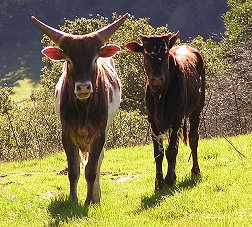
The organic sheep farm contributes to cover crop tillage. Several times a year, the sheep are permitted to graze among the vines of Benziger’s de Coelo estate.
UNIQUE PRACTICES
Farming for Flavors
Farming for Flavors™ is a Benziger-trademarked winegrowing philosophy dating back to 1985 and was the impetus for their certified sustainable program. By focusing on specific vineyards, viticulturists realized what techniques were necessary to produce positive flavors particular to each site. Professionals cultivated vineyard blocks with respect to exposure, elevation, soil profiles, rootstocks and clones. The Farming for Flavors™ process was then implemented by their numerous growers, and today, Benziger maintains more than 300 separate lots in the creation of about 20 wines a year.
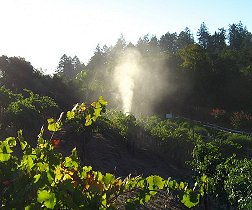
Benziger utilizes teas and sprays “. . . to restore and heal the land after a season of farming”, says Mike Benziger, and is one of the only wineries to produce its own such amendments. Production is completed at the Sonoma Mountain estate preparation facility, which includes areas for drying the ingredients, assembling the recipes, and underground storage.
Remedies include eight prescribed by the Biodynamic model:
1. Cow manure humus sprayed into the vineyard to stimulate microbial activity in the soil
2. Ground horn silica to make light more efficient for photosynthesis
3. Yarrow to aid absorption of important trace elements
4. Chamomile to stabilize nitrogen
5. Stinging nettle for soil health
6. Oak bark to strengthen the plant’s immune system
7. Dandelion to aid photosynthesis
8. Valerian to stimulate absorption of phosphorous
Restaurant Partnerships
Planting vegetable gardens is just one method of achieving biodiversity, a precept in green farming. For that, and the benefit of The General’s Daughter restaurant, Benziger has provided a plot on the Sonoma Mountain estate to create one such garden. Chef Preston Dishman oversees the planting and management of the garden, which supplies biodynamic vegetables to the gourmet restaurant.
Benziger plans to extend this opportunity to three other restaurants local to each of their estate vineyards.
Other Green Habits
Beyond the vineyards, Benziger has implemented environmentally beneficial processes like greenhouse gas emissions reduction, solar lighting, natural ventilation, night cooling, and painting its buildings lighter colors to reduce heat. Management has also devised an environmental packaging program prescribing the use of recyclable or reusable packaging and working with suppliers to take back shipping containers.
ABOUT THE WINERY
Benziger Family Winery was established in 1980 on an 85-acre estate in Glen Ellen, California, purchased by Mike and Mary Benziger. Soon after, Mike’s parents, Bruno and Helen, and brothers Bob, Joe and Jerry joined the group to help start the winery. As early as 1981, they produced their first wines, garnering critical acclaim.
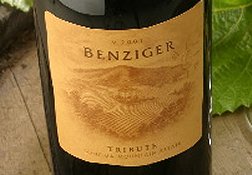
Because of Benziger’s commitment to natural farming and their tendency to treat employees as family, the winery was named one of the best places to work in the North Bay by the North Bay Business Journal in 2006. Aspects of their sustainable program not covered by organic or biodynamic certification are implementation of employee benefits and community outreach.
By 2007, Benziger succeeded in producing all wine from grapes grown on farms that were certified biodynamic, organic or sustainable. Benziger is willing to sacrifice quantity for better quality. “We are prepared to make less wine—that’s how strongly we feel . . .” declares Mike Benziger.
CONCLUSION
The greatest output from green farming won by the wine industry and the consumer is the connection to the land realized in the glass. That anyone would suspect wines made with a hands-on approach in the vineyards and a hands-off approach in the winery would result in an inferior concoction, seems puzzling. Still, some of the early organic wines were a bit rough, making wine enthusiasts, therefore, winemakers, run the other way, but through earnest studies and experimentation, trailblazers are gradually winning back our respect.
“There is a plan for each wine that began in the vineyard,” notes Rodrigo Soto, Director of Winemaking at Benziger. That means all winemaking activity - fermentation, pumpovers, aging, must be executed to preserve natural fruit character.
With more and more wineries riding the green train and turning out wines that are just as good or better than traditionally produced wines, the impetus is there for remaining wineries to get on board.