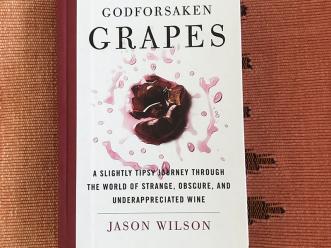
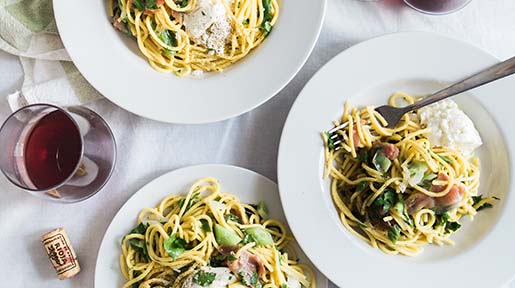
After ten years in the restaurant industry, six years in the wine industry, countless hours spent studying – including college level courses on the subject – I can honestly say that I still don’t “know” wine at all. It’s one of those subjects that one needs to stay on top of, like politics or the dishes piling up in the sink. The question is how do you make it from one end to the other? How do you master (or at least come to terms with) a growing world of wine knowledge?
Three decades ago, author and journalist George Taber turned the wine world on its head with his famous four paragraph Time magazine story on the Judgment of Paris. That story, often referred to as "the most significant news story ever written about wine" put California alongside the world's top wine regions and sparked a "who's better?" debate that rages to this day. Now Taber has turned his attention to the latest raging debate in the wine world: Corks.
It is hard to believe a person exists who has thought more deeply and comprehensively about Washington wine than wine writer Paul Gregutt. Based in Seattle, Gregutt wine writings appear in a slew of Washington publications including the Seattle Times, Yakima Herald-Republic, Walla Walla Union-Bulletin, Pacific Northwest Magazine, and the Spokane Spokesman-Review. He is also a Contributing Editor and the Northwest wine reviewer for Wine Enthusiast magazine. His new book, Washington Wines & Wineries – The Essential Guide, is the authoritative guide to Washington wine. I recently caught up with Paul to discuss the book and his views on Washington wines.
Bordeaux. The word alone conjures up thoughts of the finest wines the world over and the passionate oenophiles who clamor to get their hands on them. London author Stephen Brook, in his new book The Complete Bordeaux: The Wines, The Chateaux, The People, has produced what may be the definitive work on the wines of Bordeaux. In it Brook assesses over 1000 Bordeaux wine properties with detailed information on the grapes, wines, and production of each property. IntoWine caught up with Stephen recently to chat about the book and gather his thoughts on all things Bordeaux.
Why this book now?
Existing books on Bordeaux, such as Robert Parker’s or Clive Coates’s, were focused on tasting notes of individual wines, and paid little attention to lesser known areas of Bordeaux which offer good value to consumers. My book was intended to rectify that by including all regions of Bordeaux, as its title suggests. Many winelovers who might have bought Bordeaux routinely in the past may have become disillusioned by the soaring prices of the top growths, and it was part of my intention to discuss the vast number of excellent wines that remain eminently affordable.
Enjoying wine is as much a hands on experience as is anything. The history of the wine –the grapes, the region, the winemaker, the vintage- and the people with whom you drink it are the variables that shape the wine drinking experience from one of simple consumption to something of deeper impact in our daily lives. Award winning writer Natalie MacLean has carved out a career by skipping past the pretensions of wine and food and embracing the personalities, emotions, and simple human curiosity that make wine and food a sensual obsession rather than just basic sustenance.
When talk turns to Napa Valley royalty, Robert Mondavi and the Mondavi family indisputably qualify as the ruling monarchy of the Napa Valley –and frankly the US- wine industry. With an almost biblical or Shakespearean flair, the Mondavi family story of the last 100 years is one of passion, pettiness, family squabbling, wild success, dramatic failure, and of course, wine. In her new book, The House of Mondavi: The Rise and Fall of an American Wine Dynasty, author Julia Flynn delivers a masterful narrative on the Mondavi clan. IntoWine.com recently had the privilege of chatting with Julia about the book and the evolution of the Mondavi family story.
Each year at 12:01 AM on the third Thursday of November, millions of bottles of Beaujolais Nouveau begin a journey from a little French village to locales across the globe. Wine stores and cafes enthusiastically greet these shipments with signs and banners proclaiming "Le Beaujolais Nouveau est arrivé!" "The New Beaujolais has arrived!". With this begins the annual celebration of the arrival of the French wine Beaujolais Nouveau, a celebration steeped in tradition, frivolity, grandeur, legend, and of course, fabulous wine.
Wine Clubs are increasingly ubiquitous and wine enthusiasts have a plethora of choices when stocking their personal wine cellar. In the new book, , author Jim Arnold and Photographer Ingrid Larnis transform the broad spectrum of Sonoma County wine club offerings into a handy dandy guide that details each clubs benefits, costs, perks, and other pertinent information. IntoWine.com recently chatted with Jim Arnold about the book and the grand experience that came with researching it.
There are few people who have thought harder or more comprehensively about where the French wine industry has been and where it is heading than author Andrew Jefford. In his book, The New France, Jefford delves deep into seemingly every angle of importance regarding French wine. The reviews have been uniformly exceptional.
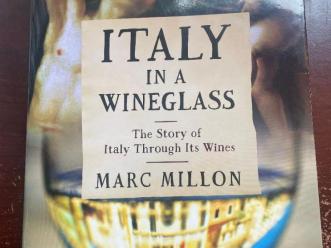
The history of wine -while certainly encompassing the evolution of viniculture- touches upon many aspects of society. Wine is, in simple terms, a beverage but it is also an industry, a culture, a valuable natural resource, a symbol of status (to some), and an inspiration for both art and architecture. The books noted below each examine a different but unique angle of wine history and are worth checking out.
For anthropology buffs, Ancient Wine: The Search for the Origins of Viniculture by Patrick McGovern examines the earliest stages of vinicultural history and how wine is interwoven with human culture through centuries of change.