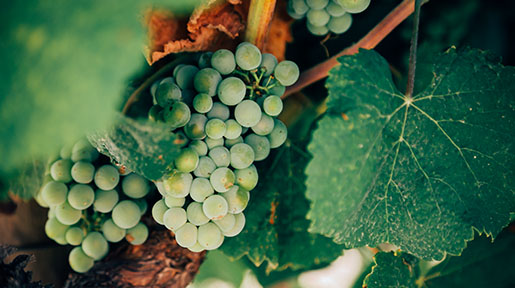
I’ve always loved Riesling in its myriad forms. Ranging from dry to very sweet, this most versatile grape is a classic. Usually low in alcohol, with moderate to high acid, and tones of green apple, citrus, apricot, white flowers and minerals, this wine goes with just about anything but red meat.
My introduction to Riesling came at a B&B in the south of England.
After dinner one night, my group came back to the Inn and our hosts offered us glasses of a delicious, sweet wine. It was unctuous, honeyed and floral with a bracing green apple overtone. I tried to read the label, but didn’t actually understand most of it. The few words I could pick out – Riesling and Beerenauslese stuck in my head. I was determined to learn more.
My studies at the CIA introduced me to the varying forms of the classic German Riesling. Ranging from dry to sweet, they are:
Kabinett
Spätlese
Auslese
Beerenauslese
Trokenbeerenauslese
Eiswein
Kabinett is the driest, with grapes picked at normal harvest. Spatlese is wine made from late harvest grapes. Auslese is made from hand- picked riper grapes, sometimes with Noble Rot. Beerenaulese uses grapes affected by Noble Rot. Trokenbeerenaulese means “dry”, but refers to the grapes that are dried on the vine, concentrating the sugar content. Eiswein is very ripe grapes that have frozen on the vine, producing the sweetest style of Riesling. As they go from dry to sweet, the fruit and floral tones increase along with the sugar.
But this is only true for German Riesling, which complicates matters. Riesling made in other countries are not restricted to these naming conventions, so you need to know the winemaker’s style or hope that they have good information on the label, or trust your wine salesperson. Sometimes even they can get it wrong.
This was brought home to me one evening while dining in a wine bar in the Midwest. It was one of those “user friendly” wine bars where they had symbols on the wine menu to indicate if a wine was “luscious”, “bold”, “sweet”, etc. The server didn’t know the wines (always a bad sign in a wine bar!), so I went by the symbol to order what should have been an American dry Riesling to go with the scallops. Ugh. While it was a lovely wine, it was too sweet for an entrée and should have been categorized as “sweet”.
Despite the potential confusion, Riesling consumption is rising in the US, and Washington State is the epicenter. Washington produces more Riesling than any other state, with Chateau St. Michelle leading the way. Even Californians are coming to Washington – Randall Graham from Bonny Doon in Santa Cruz has made a Pacific Rim Riesling for years using Washington and German grapes. Last year he bought vineyards in the state and is building a wine making facility.
The Pacific Rim Rieslings produced by Randall Graham and winemaker Nicholas Quillé are a perfect microcosm of American Riesling styles – dry, sweet, and dessert wines.
Dry Riesling is low alcohol, a little tart, and full of apple, mineral, and white flower aroma and tastes. Easy to drink, this wine is fantastic with light dishes including seafood, pâté, pork (especially stuffed with dried fruits, or a fruit sauce), ham and prosciutto, sushi, smoked fish and meat, duck and turkey. Dry Riesling is always on my Thanksgiving table – it’s pretty much the only wine that can take on all of those Holiday flavors.
Sweet Riesling will have more fruit characteristics, upping the peach/apricot quotient. This wine pairs well with foie gras, rich creamy cheeses, lobster, and fruit, but its perfect match is spicy Asian foods. The sweetness in the wine cuts the heat in Thai, Indian, Chinese foods. Try it with Szechuan food and I swear you won’t go back to beer.
Eiswein (or the Pacific Rim Vin de Glacière) is the sweetest, most fragrant wine made from this grape. A sip of this will fill your mouth with candied orange, apricot and pear. I love it all on its own, but it’s great with creamy desserts – crème brulée, strawberries and cream, or even a simple Madeleine.
The sun is shining here in Seattle, and it’s time for the gang’s Spring Planting Party, one of my favorite events of the year. Everyone brings plants to trade, empty pots and soil, and this year I’ll provide the food. I’m taking it easy – ordering takeout Sushi and Chinese food, and “planting” a selection of Rieslings in ice. After an afternoon of digging in the dirt, we’ll be well rewarded by a delicious dinner with rich, spicy, sweet, and aromatic flavors.