With one last column before Christmas and New Years, I would like to continue talking about the wonderful sparkling wines of Italy. This four part series started with the wines of Asti in the Piemonte, then we explored the Franciacorta’s of Lombardia, and the last column discussed the ubiquitous Proseccos of the Veneto. All of these will make tasty and affordable additions to your holiday festivities.
In this article, I want to explore a wine that may be one of the most misunderstood wines not only in Italy, but anywhere. That wine is Lambrusco.
The name brings up connotations of sweet frothy inexpensive supermarket jug wines. Yet, there is another side of this wine worth exploring.
Lambrusco is made in Emilia-Romagna, which is in the central part of Italy lying south of the Veneto and north of Tuscany.
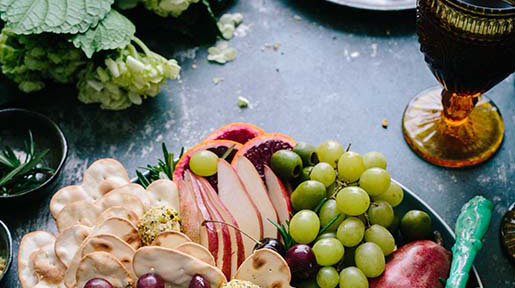
Emilia-Romagna is not one of Italy’s premier wine regions. It may, however, be the premier food region. This is the home of Parmesan-Reggiano cheese, Balsamic vinegar and Prosciutto ham. Over time, this frothy slightly acidic wine became a great accompaniment for the local foods slightly salty, slightly dried foods. The rich, fruity style matches the food of the area perfectly. Lambrusco cuts through the food with its acidity. The bubbles aid in the digestion of the rich cream sauces and fatty meats.
Lambrusco is the name of a grape varietal. It is a prolific grape that produces good if not spectacular wines. It was known in Roman times as Labrusca and written about by Cato the Elder. Cato wrote that the grape was so productive that a half an acre could yield 300 amphorae of wine. Pliny the Elder also wrote about the use of these grapes in a bitter concoction for medicinal purposes. It became known as Lambrusco in the 18th century.
Historically, like Moscato d’Asti in the Piemonte, Lambrusco was a wine made for local consumption and especially for the grower’s own personal use.
Today, there are some very good Lambruscos made. The wineries producing these better Lambruscos use a different lower yielding strain of the Lambrusco grape. In addition, they allow only a few clusters to grow on each vine. These are not revolutionary techniques. The wine world knows that lower yields and less fruit on the vine means that all the goodness of the vines get packed into fewer grapes and the flavors do not get diluted. At the same time, growers willing to sacrifice quantity for quality invariably are the same ones who use the same logic during the entire vinification process. Lambrusco is made in what the Italians call the frizzante style meaning a semi-sparkling style of wine. They are wines meant to be drunk young and fresh.
Most Americans are familiar with the Riunite version of Lambrusco. Riunite is the name of a collection of Co-ops that makes Lambrusco is a sweeter style. This sweeter style is known in Italy as amabile. This is a style of wine that can also be traced back hundreds perhaps thousands of years. In the 1970’s, however, it became incredibly popular in both Germany and the United States. The American importer, the Banfi family, made Lambrusco a household word in the United States. This sweet, semi sparkling version, is not bad and sells for around $5 or so a bottle, certainly a value in anyone’s book. While some dismiss this as a not serious “soda pop” wine, its sales figures demonstrate an acceptance in the American, and indeed world markets, that very few wines ever achieve.
There is, however, a different style of Lambrusco. A more traditional form that is prevalent in Emilia-Romagna. The better Lambrusco producers turn out a frothy drink with flavors of dried cherries and some strawberry notes. These wines are dry or with just a barely perceptible notion of sweetness. Often these wines are made in the traditional way with the secondary fermentations being done in the bottle instead of the mass produced tank fermented style.
There are actually four different DOC regions in Emilia-Romagna for the production of Lambrusco. Each ones has a slightly different style. The first three DOC’s are centered around the town of Modena (Famed for its Balsamic vinegar) in the north. They were created in 1971. The wines of DOC Lambrusco di Sorbara tend to be smoother, more feminine in style. They use at least 60% Lambrusca di Sorbara grapes with up to 40% being Lambusco Salomino. The wines of DOC Lambrusco Grasparossa di Castlevetro are more masculine and full bodied. They require at least 85% Lambrusco Grasparossa grapes.
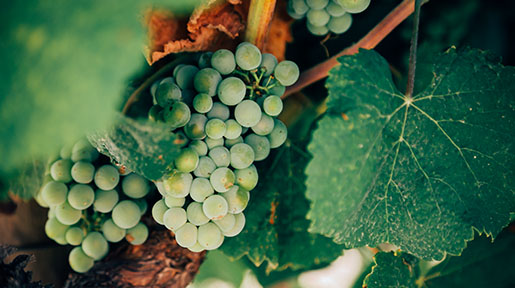
Finally, Lambrusco Salamino di Santa Croce is the northernmost of the DOC’s. A minimum of 90% of the grapes must be Lambrusco Salamino. These wines are known for their aromatics and tend to be full bodied. The name comes from the fact that the grapes clusters are small and compact and thought to resemble a salami. The fourth region is now known as simply Reggiano. This is the DOC with the highest production and includes Riunite. The grapes must be 85% of either Lambrusco Marani, Lambrusco Salomino, Lambrusco Montericco, Lambrusco Mastrei, and/or Lambrusco di Sorbara. The other 15% can be the Ancellota grape (which is also used to make a sparkling wine on its own in the area).
Lambruscos are usually made as either Red or Rosado (Rosé). They can either be secco (dry), amabile (semi-sweet) or dolce (sweet). A white version of Lambrusco called Bianco is also made in small quantities. This is made by separating the skins from the grapes before vinification
The amiable styles make for a wonderful aperitif. The secco style can be merged with almost any type of food. It really is versatile. The dolce style makes a nice dessert by itself or perhaps served with a cookie or biscotti.
So which producers should you look for? Villa di Corlo is one of the premier producers of Lambrusco. Their wines range from $10 to $20 depending on pedigree. Especially good is their top bottling labeled Coleto. Other producers worth seeking out include Medici Ermete and Barbolini. The Medici Ermette Concerto runs about $20 and is a vintage dated wine that is very nice. The Ermette Bocciolo is nice too. The Ceci runs about $15 or so. The Barbolini Grasporossa di Castelvetro is around $13. Vittoria Graziano has a classic dry Lambrusco di Grasparossa that may be difficult to find. And, don’t be afraid to try a bottle of the Riunite either.
These are wines meant to be drunk young. While vintage dating is not critical, it does let you know the age of the wine. Look to merchants you trust and that sell a lot of these wines. Avoid stores with the bottles covered in dust in an obscure part of the store. European Union labeling laws now put some kind of code on the bottle that usually have the year (or the last two digits) on the bottle.
There are other types of sparkling wines made in Italy that are worth exploring. Producers like Ferrari in Trentino or Lungarotti in Umbria, and others too, make some of the best sparklers in the world. They are wonderful. Hopefully, we can examine those wines on another day. For now, though, I wish you all a happy holiday season. I hope you all add an Italian sparkling wine to your parties this year and see for yourself how crowd-pleasing they can be.
I hope you all go out and try a bottle or two and let me know what you think.
Loren Sonkin is an IntoWine.com Featured Contributor and the Founder/Winemaker at Sonkin Cellars.