As the holidays approach many people are looking for a sparkling wine to serve at intimate dinners and large parties. The region of Piemonte produces two that should be on your list: Asti Spumante and Moscato d’Asti. The area called the Piemonte is at the foot of the Alps in the northwest corner of Italy. This region produces many other wines including dry reds and whites and also some sparkling wines. For a more detailed history of the area please see the first part of my three part series on Barolo, the Piemonte’s most famous wine.
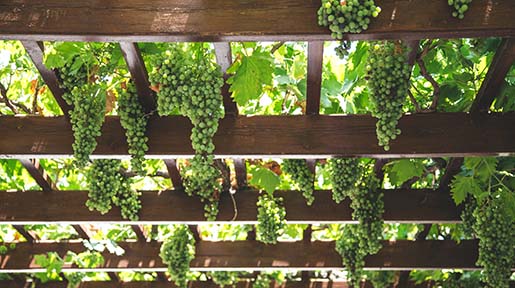
The Moscato grape has been cultivated near the commune of Asti for hundreds, if not thousands, of years. It is described in the Statues of the Commune of Cannelli written in the 1200’s. At the end of the 16th Century, a jeweler from Milan, Giovan Battista Croce, published a recipe for making Moscato D’Asti. Croce had become wealthy making jewelry for royalty. He moved to Turin and purchased a vineyard between the towns of Montevecchio and Candia. There, he worked on perfecting viticulture.
In 1606 he published “Of the Excellence and Diversity of Wines that are Made on the Mountain of Turin and How To Make Them”. He explained that to make Moscato, the grapes are separated from the stems immediately before pressing. The must (unfiltered crushed grape juices) obtained is then vinified separately from the skins. The must is cleaned and disinfected forming a coperta. The juice is filtered repeatedly creating a clean sweet juice.
There are two types of sparkling sweet wines made from the Moscato grape in the Piemonte. One is the ubiquitous Asti Spumante. This is a wine that is often mass-produced in industrial quantities. Many of us can remember the television adds for Martini & Rossi Asti Spumante. We may have even tried some. It is a sweet, sparkling wine that goes down easy. Although it would be easy to dismiss this wine, it serves a nice function, which is a festive wine at a very affordable price. Many people enjoy the sweetness of the wine. The sweetness comes from the natural high sugar levels found in the Moscato grape.
Asti Spumante can be made in the same traditional method that is used for Champagne in which the wines undergo a secondary fermentation in the bottle. More often than not though, they are made in a larger, more industrial method, in which the wine is allowed to go thru its fermentations in a large stainless tank. The resulting wine is lower in alcohol than most wines. Asti Spumante typically has 9% alcohol levels.
There are many industrial versions of Asti Spumante. Large producers churn out millions of bottles of perfectly palatable Asti Spumante. Included among them are Martini & Rossi, Cinzano, Banfi, and Bersano. In addition, there are a bunch of small more artisanal producers making the wine too. Some to look for would include Fontanafredda (a long established Barolo producer), Paolo Saracco and Cascina Fonda. Perhaps the best of all of these is Walter Bera, whose Asti Spumante may be difficult to find, but well worth the search.
Also made in Piemonte from the Moscato grape is the wine called Moscato D’Asti. This is a wine made in what the Italians call the frizzante style. This means that it has a light effervescence to it. In fact, although it is bottled under pressure, the cork is more of a traditionally styled cork than a mushroom shaped cork held in with a wire cage (like Asti Spumante or Champagne). The difference arises when the winemakers stop the fermentation of the wine at an earlier point. This results in less of the sugar being consumed by yeast leaving a sweeter wine with less alcohol.
Traditionally, Moscato d’Asti was a wine that was made by the winemakers for themselves. It does have an interesting history. The grower-winemakers would simply toss the sweet grapes into large open topped wooden vats and the grapes would start to ferment. Since the grapes were left on the vine for a long time, by the time they were harvested and thrown into the vats, the outside temperature was starting to drop in this high altitude region. The cold weather would stop the yeast fermentations in its tracks. When the temperatures warmed up in the springtime, the wine would have trapped carbon dioxide bubbles in it. The winemakers realized that they had a tasty product and bottled the wine. The problem was the trapped CO2 could cause the bottles to explode under pressure.
Moreover, there were often live yeast cells that would feed on the unfiltered remnants in the bottles creating even more CO2 and causing bottles to explode. It was not uncommon to lose half or occasionally even all of ones production when bottles exploded destroying themselves and the bottles around them. And you can bet this did little for the morale of the cellar workers who had to take extra precautions when working near the bottles. The winemakers realized that these bottles reacted violently to movement and increases in temperature. Hence, they tended to keep them for their own use and not sell them to the public. They also realized that by filtering the wines so they had no plant matter, dead (and living) yeast cells and other “contaminants” in the wine, they could make a safer product. In the old days, before modern equipment, filtration was done by running the wines through tightly wound cloth. Often the best filter turned out to be the socks of the winemaker.
Nowadays, Moscato d’Asti’s are filtered quite heavily by mechanical devises. The resulting wines are clean and pure expressions of the Moscato grape. They are more full and less crisp than their Asti siblings. They tend to be sweeter but perhaps with more complexity and interest. Certainly, the nose on these wines can be enticing. Typically, people describe their aromas as peaches and apricots, but I am always taken back to my youth and the scents of Vernor’s Soda®. They finish with a refreshing combination of acidity and bubbles that seem to wake up one’s palate.
Traditionally Moscato d’Asti is served with, or simply as, a dessert. In the Peimontese culture, meals are long, multi-course affairs. By the time dessert comes, Moscato d’Asti is a light, refreshing digestive that stimulates one’s palate. The lower alcohol levels (typically closer to 4 or 5%) make it less filling and easy to consume. We have found though, that these wines make wonderful aperitifs. Despite the many comments of how much these are “Soda Pop Wines”, whatever that means, the bottles are drained in no time. People's appetites are stimulated and they are not too inebriated to sit down to a nice meal.
Besides the producers listed above, many of whom make wonderful Moscato d’Asti’s, look for Michele Chiarlo, Paolo Saracco and La Spinetta wines. These are delicious and wonderful expressions of the wine. This is one wine though that is rarely bad. Producers who go through the trouble of producing a wine that is safe to transport rarely make a bad wine. It is a combination of scientific controls and the characteristics of the Moscato grape itself.
A nice feature of these wines is their pricing. Asti Spumante can almost always be found for less than $20 a bottle and closer to $10. A Moscato d’Asti may run a few bucks more for some, but many are less than $20. For the holidays, these wines may be the perfect starter to your parties as well as the wine to serve with a holiday cookie for dessert. In either case, they are much less expensive than many of their French cousins.
I hope you all go out and try a bottle or two and let me know what you think.
Loren Sonkin is an IntoWine.com Featured Contributor and the Founder/Winemaker at Sonkin Cellars.