Each year at 12:01 AM on the third Thursday of November, millions of bottles of Beaujolais Nouveau begin a journey from a little French village to locales across the globe. Wine stores and cafes enthusiastically greet these shipments with signs and banners proclaiming "Le Beaujolais Nouveau est arrivé!" "The New Beaujolais has arrived!". With this begins the annual celebration of the arrival of the French wine Beaujolais Nouveau, a celebration steeped in tradition, frivolity, grandeur, legend, and of course, fabulous wine.
Rudolph Chelminski, in his book I’LL DRINK TO THAT: Beaujolais Nouveau and the French Peasant Who Made it the World’s Most Popular Wine, draws on decades of first hand perspective to detail how the people, land, and culture of Beaujolais -not to mention a peasant vintner named Georges Duboeuf- come together to form the most unique of wine stories. IntoWine.com recently had the pleasure of chatting with Rudolph Chelminski about Beaujolais and the new book.
What inspired you to write a book about Beaujolais Nouveau and Georges Duboeuf?
- Collin-Bourisset Beaujolais Nouveau
- More Beaujolais Nouveau Producers
Let me settle one point right away: my book isn’t about Beaujolais Nouveau, and not even limited to Beaujolais wines, either. The subject is the Beaujolais or, as the French say, le Beaujolais. “The” Beaujolais because it’s a wine, of course, but what many people don’t realize is that it’s also a place, a little rectangle of vineyard land roughly between the cities of Mâcon and Lyon, in central France. The old capital of this winemaking area is the town of Beaujeu, and le Beaujolais signifies both the land lying around Beaujeu and the wine that’s made there. In my book I set out to depict the land, the people, the history, the traditions and folklore as well as the wine. And Beaujolais Nouveau is only one part of all this.
What inspired me to write about it? You’re right to bring up Georges Duboeuf, because the whole thing started with him. Georges and I have been friends for more than 30 years now, and he’s really an extraordinary guy, always full of ideas.
We were having lunch a while back, talking about various articles I’ve done in the past on Beaujolais and French wines in general, and suddenly he said why not do a book on the Beaujolais? At first I didn’t take it all too seriously, but the more I thought about it, the more I liked the idea, because of an essential paradox: just about everyone knows the name “Beaujolais,” but hardly anyone, even in France, really knows the place and what the people who live there are like. In all false modesty I think I can say I do, because I’ve been frequenting the Beaujolais since the sixties, and I’ve got a great affection for the land, the wine and the people who make it. Beaujolais vignerons (winemakers) are warm, good-hearted, generous, funny and sometimes even outrageous, because they love life, they love joking around and, especially, they love their wine. They badly want you to love it, too, and they give it away with a profligacy that would shock their millionaire cousins in Bordeaux or Burgundy. No way you can leave a Beaujolais winegrower’s place without a free glass or two under your belt. For them, this is just normal hospitality.
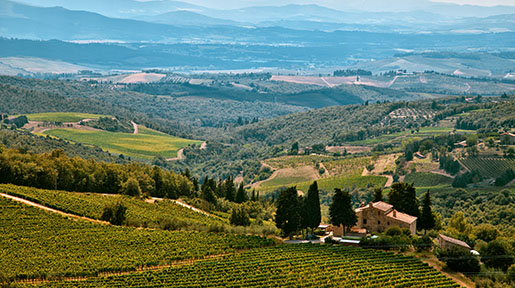
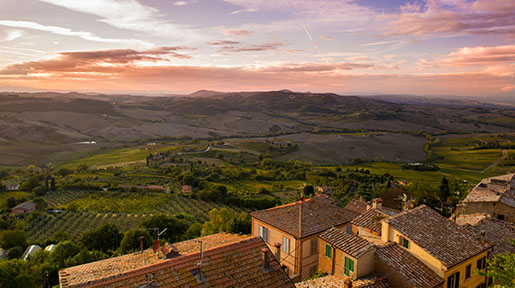
On top of all that, the landscape is gorgeous, just stunningly beautiful. Burgundy and Bordeaux produce some great wines, but the countryside is generally boring to look at. The Beaujolais is like a Hollywood set for an ideal vineyard region. The only places I can think of to rival it in beauty would be parts of Alsace and maybe the more spectacular areas along the Rhine.
What makes Beaujolais unique? Is it the wine itself, the marketing or the tradition?
The wine itself is such a familiar item – who hasn’t lifted a glass of Beaujolais at one time or another in his life? – that people think they know it. But they really don’t. There’s so much more behind that glass of wine, hidden away in the slopes and valleys of the Beaujolais hills. What makes the Beaujolais unique is the simple fact that throughout most of its history it was a region of backwater poverty, a little bit like Appalachia in the U.S. It was populated by poor farmers, smallholders who kept cows and grew crops to stay alive, and made wine as a side activity. Sticking with that Appalachia analogy, you could say that wine was their form of moonshine.
That situation lasted right up to the end of the Second World War, and plenty of Beaujolais oldtimers can still remember times when it was just their cows and vegetable patches that kept the family going in years when the wine market was down, or when hail destroyed the grapes. The Beaujolais is a very down-home kind of place, and you won’t find any wine millionaires there the way you do in Bordeaux or Burgundy. The people don’t take themselves seriously, but they’re absolutely devoted to their wines. Most of them are still artisans, in an age when globalization, industrialization and technicity are trampling traditions everywhere.
In what ways did the French social class structure affect the growth and popularity of Beaujolais?
Until very recent times, Beaujolais wine people were in thrall to a very particular social and economic class structure. For as long as anyone could remember, these peasant smallholders had been exploited by a dominant cartel of wine dealers – Burgundians for the most part – who bought their yearly production on a take-it-or-leave-it basis, kept the prices low, mixed it up into big batches and sold it under their own names. An old snobbery that dated all the way back to the 14th century (France is a country with a long history and a long memory) had decided once and for all that Beaujolais wine and the gamay grape it was made from were inferior to the Burgundies of the pinot noir grape.
Beaujolais vignerons suffered from a second-class status that had been imposed on them by the dealers, and it was not until Georges Duboeuf came along that they were treated with respect and their wines were given a proper chance to prove themselves on the worldwide marketplace. Duboeuf singlehandedly broke the old socio-economic structure that had dominated the Beaujolais. Born into the same class of peasant artisan winemakers, he revolted against the dealers’ cartel by going out and selling his family wines direct to restaurants. He started from next to nothing at age 18 – two bottles of wine in his bike’s carrying case – and little by little built up his business over the years. He did it so well – he’s a ferociously hard worker – that he eventually steamrolled the dealers’ cartel and drove most of them out of business. And so, ironically enough, the guy who started out by revolting against the dealers has now become the biggest dealer in the Beaujolais. But there’s none of the old-style exploitation with Duboeuf. All the vignerons clamor to sell their wines to him, because they know he’s fair, and his worldwide reputation makes them look good. When Duboeuf buys a batch of wine it means their stuff has passed a test, because he’s such a picky and demanding chooser – Duboeuf is miles ahead of anyone else in the Beaujolais for wine tasting. So when he buys your stuff it’s a little bit like winning a medal.
Beaujolais Nouveau is arguably known as much for its innovative marketing techniques as is the wine itself. What about its marketing struck you as particularly unique or clever?
Contrary to a widely held idea, the Beaujolais never had much of a marketing budget to push its wine sales. Right up until the sixties, it was a just a relatively unimportant regional wine. It was only after Parisians began discovering it en masse that its reputation spread to the rest of France and then the world. But there were three particular factors that helped its popularity to explode. First, the name – it’s pure magic. If you put a million-dollar team of marketing geniuses together they could never come up with a prettier, more appealing and easily pronounceable name than those three little musical syllables “bo-jo-lay.” A name like that sells itself in any language in the world.
Second, there’s the fact that the gamay grape has the very particular, very rare quality of being able to make a pleasantly drinkable wine extremely young – only two months or so after pressing. This is fabulous, a unique advantage for the Beaujolais. Try that with a two-month-old Bordeaux and you’ll think you’ve got a mouthful of porcupines. Lyon, France’s second city, is right next door, and for a couple centuries Lyonnais barkeepers and restaurateurs had been in the habit of buying barrels of the new wine that had been pressed in September and serving it to their customers in November. It wasn’t until the sixties that the same custom began to catch on in Paris – but when it did it spread like wildfire. Now it’s worldwide, and Beaujolais Nouveau is served in Shanghai and New Delhi exactly the way it is in Paris or New York.
But the third marketing advantage for the Beaujolais was the best one of all, because it was the most fun, it developed tremendous publicity, and it was absolutely free. I’m speaking of the New Beaujolais Run. It started in the early seventies when a couple of English wine professionals made a bet as to which would be the first to get his carton of wine from the Beaujolais to London. They raced on the French roads to the Channel ferry, and then into London, and each one proclaimed himself the winner, of course. After their little competition got into the press more and more people joined the race in following years, and soon it became a perfect example of English eccentricity. Competitors raced in BMWs and Ferraris, assorted airplanes and hot-air balloons, in antique cars, horse carts, fire engines, you name it. It got tremendous publicity, and the Beaujolais people didn’t have to pay a cent for it – in fact they were paid to part with those cartons of wine. The New Beaujolais Run was finally outlawed when the cops stepped in and overruled all that the high-speed foolishness on French and English roads, but it had given a bonanza of publicity to the wine.
In the book you explore the role Georges Duboeuf plays in the evolution of Beaujolais Nouveau. If you had to single something out, where did he have the greatest impact?
Duboeuf has become identified to a great extent in relation to Beaujolais Nouveau, because he has been the most successful in selling it around the world. In fact some people even go so far as to say he invented it. This is a doubly false impression, because people have been drinking the new wine for at least couple of centuries, and Nouveau forms only a small part of Duboeuf’s panoply of wines. But he was smart enough to spot the fad when it was just getting under way, and he guessed rightly that it was going to grow in popularity. So he persuaded a lot of the best growers and co-ops to vinify an increasing portion of their harvests in primeur, as they call the new wine. (The difference between vinification for primeur and for normal wine is essentially a shorter maceration period.) If they made good wine, he promised, he would sell it – and sell it he did. It was almost entirely due to Duboeuf’s skills in selecting, blending and selling that Beaujolais Nouveau went worldwide.
A love/hate relationship exists among wine enthusiasts when it comes to Beaujolais Nouveau. Some people love the fanfare and enthusiasm that surrounds its annual release while others dismiss Beaujolais Nouveau as a mere novelty. What drives this divide in perception?
I don’t think there’s a divide. Or there shouldn’t be, at any rate. Because Beaujolais Nouveau is a novelty, and no one should pretend otherwise. There is the normal selection of Beaujolais wines, aged normally, and next to that there is primeur. It’s different, it’s fun, it tastes good and its easy to drink – but no one ever said it was a big or a sophisticated wine. It’s a novelty! But there’s nothing wrong with that. I think a big reason why it became so successful in France is because they don’t have Thanksgiving there. It’s a long slog from the end of summer vacation to Christmas, and when the cold rain and the slush and the snow fall on French cities life can seem pretty soggy and unpleasant. The arrival of the new wine in mid-November is like a little burst of sunshine, and gives everyone an excuse to belly up to a bar and toss off a glass of optimism juice – that’s all Beaujolais Nouveau is. In the States we have the Thanksgiving period to break the winter blues and the monotony between summer and Christmas. So if the French had Thanksgiving, maybe Beaujolais Nouveau wouldn’t have taken off like it did. This being said, a glass of primeur goes very nicely with turkey, so maybe the best compromise is to mix the two traditions.
In general, how does the French wine industry view Beaujolais Nouveau?
All the other wine regions are jealous of its success, and mad as hell that they can’t do the same with their own stuff.
You devote a section of the book to exploring the 2006 vintage. What did you learn?
It’s a good vintage, a very typically Beaujolais year – that is, the wine is full of fruit, a real invitation to drink a glass or two without needing to go into any deep analysis. This being said, the two recent vintages that were really extraordinary were 2003 and 2005. 2003, like 1976, was a year marked by a prolonged heat wave and drought. Wine grapes don’t usually fear the sun, but there was so much of it that the years wines were sort of grilled, but the best ones were deep and muscular. Some of the 2003 Morgons, for instance, were truly extraordinary. 2005, on the other hand, was a year in which everything went right at just the right time, a perfect balance of rain and sun that produced wines that will keep for years and years. If you can find some 2005 Morgon, Moulin-à-Vent or Fleurie at a reasonable price, snap it up and lay it down. You won’t be sorry. The best of them, from Louis Jadot or Georges Duboeuf, for instance, are every bit as good as fine Burgundies.
What does the future look like for Beaujolais Nouveau?
It will continue to be popular, I think, as long as there is rain and slush and cold days in November. People need a bit of fun to chase away the autumn blues. The nice thing about primeur is that you can drink it lightheartedly, without feeling you’re taking an exam. I’ve never understood why so many people get so solemn about wine. It’s supposed to be a pleasure, not a chore. I’ll let the snobs and the ball-breakers draw their judgments and make their speeches, but Ill still drink Beaujolais Nouveau next fall. It’s fun.